In this episode I will tell you a fascinating story which you will not only find interesting but will remember for a long time. I have a feeling that you will convey it to your own children.
This is about our visit to Boodgur. The place of our forefathers, where our own father was born. Our father in his wisdom thought it better to show the place to myself and Doctor Sab when we were about 11-12 years old, so that we could know our origin and perhaps convey it to our children and grand children as I am doing now.
One morning we left Bangarapet, the place where we were born and brought up, for Kolar Gold Fields by train which took about half an hour and then 8 to 10 miles by walk as there was no other transport to Boodgur. The journey took us about three to four hours and we were very much tired by the time we reached the place where our Phupoo, elder sister of our father, her husband and children lived. Our Phuppa's house where probably our grand parents also lived was not much of a house as there was one hall, one antiroom, an improvised kitchen all with uneven flooring. For the bathroom there was a stone slab with a place for a big earthen container (for water). There were no doors for bath rooms or toilet except curtains made of Hussein (Jute). In the hall on one side there were huge earthen containers for storing grain for long periods. There was an attic with a bamboo ladder which served as a storing place. Our Phuppa and his two sons generally looked after the lands which produced grain, some belonged to them and some to our father and uncles.
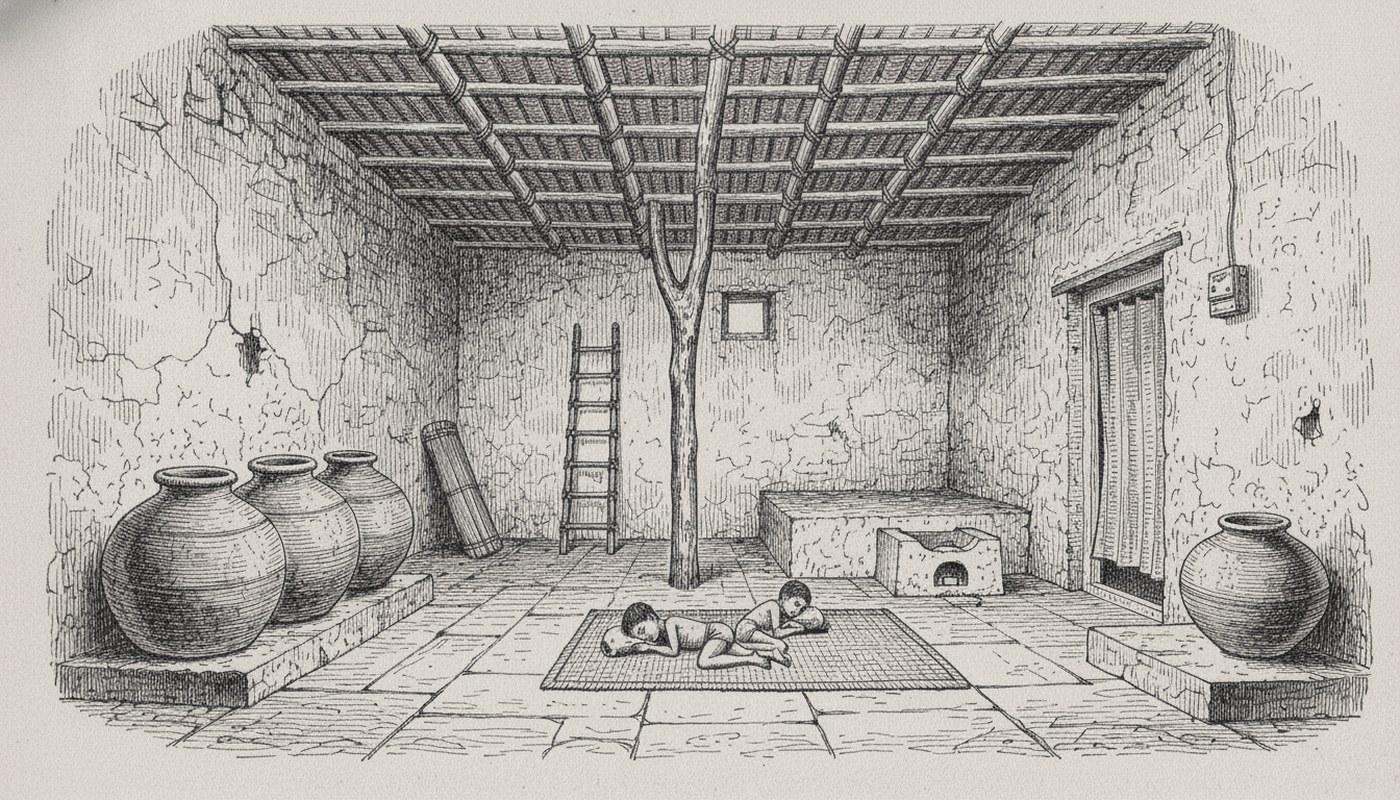
As we were very tired after a long walk we went directly to sleep on a large piece of mat (chatai). When we got up hot meal cooked by our Phupoo was ready. By God that was delicious and we ate so much that we did not need another meal until the next day.
Our cousin Mr. Abdul Rehman took us round the village to show us a few places where our grand father frequently visited. There were no streets as the village was full of big and small boulders (stones) except one main street with a few shops. The village had a population of about 2000 mostly Hindus and a few Muslims. We did not see any mosque or Madrasa as there were very few Muslims and almost all were farmers.
When I look back after a few decades I recall that although we did not see anyone offering prayers regularly, I feel our relatives living there were practicing Islam in so many ways. The reason for saying this is that very little that I saw during our maiden visit and their subsequent very few visits to Bangarapet and talks we had with them, I noted some virtues in them. They were persons who did not tell lies, they were not proud, never boasted of anything. You might say what could they boast of? You know what sort of people are famous for boasting? Those who have very little or nothing either in wealth or in manners. Most of them never complained of being poor and they always thanked God for what they had. I am now realizing that contentment was their greatest virtue. It is said that such people go to heaven without being asked any questions.
I wish we were able to see them more often than we were able to do. Our Phupoo and Phuppa rarely visited us in Bangarapet, perhaps only once or twice in our lifetime, and we visited them once. Only one cousin, our Phuppa's son Abdul Rehman, visited us occasionally. Those few visits left a mark on my memory which I can never forget. We returned from Boodgur after a day or two.