I hope you have read Book I of our family History which gave you the Story of our early life before we migrated to Pakistan.
Instead of proceeding further with the events in the new environment and the difficulties we had to face before settling down properly, I thought I should let you know some of the important and interesting happenings of our early life and of the time preceding our migration.
When we were still very young and were going to Govt. School in Bangarapet after completing Quran our father and our Taya Abba seemed to have a brainwave.
In their discussions with the elite of the town they seemed to have heard that Muslim University of Aligarh (founded by Sir Syed Ahmed) was the best institution for Muslim boys. It was also emphasized to them that those who are affluent should send their children to Aligarh if they cared to provide good education. Taya Abba and our father made up their mind to do so.
Taya Abba escorted the four of us (Vakil Sab, Fauqui Sab, Doctor Sab and myself) to Aligarh. I was only 9 years old and was included to make up the group of 4 and allowed by Railway concession. The concessional train journey was monotonous as we had to take longer routes. However one good point on this journey was that we got a chance to drop at Agra and had tour of Tajmahal and other Mughal monuments.
When we reached Aligarh the tonga (Horse cart) took us to another Mushroom institution instead of the famous Muslim University. Taya Abba was not satisfied and wanted the Tonga to take us to the proper destination. Some of the teachers who had gathered around us prevailed upon Taya Abba to leave us in the same institution which was known as Jamia Millia founded by Maulana Mohammed Ali and Shaukat Ali two famous Muslim leaders of that period. Taya Abba gave in and went back after staying for two or three days.
Jamia Millia was started only a few years back and did not have enough rooms for the classes; as a result some classes had to be conducted under the trees. The only consolation was that we could see Moulana Mohammed Ali occasionally and listen to his eloquent speeches relating to Indian's fight for freedom. He was one of the best orators in India at that time and was popular with both Muslims and Hindus.
We used to visit Sir Syed Muslim University on Fridays as there was a big mosque in the varsity premises and felt very much impressed by the discipline among the students. We envied them when we saw them in their typical uniforms of white shalwar, black Achken and Turkish cap. That university was one of the biggest in India and used to produce quite a number of graduates each year in almost all categories. It was Sir Syed's idea to have an institution for Muslims which could match any other Hindu institution so that Muslims were not left behind or backward in education. Incidentally I am proud to tell you that it produced quite a number of Muslim politicians in India.
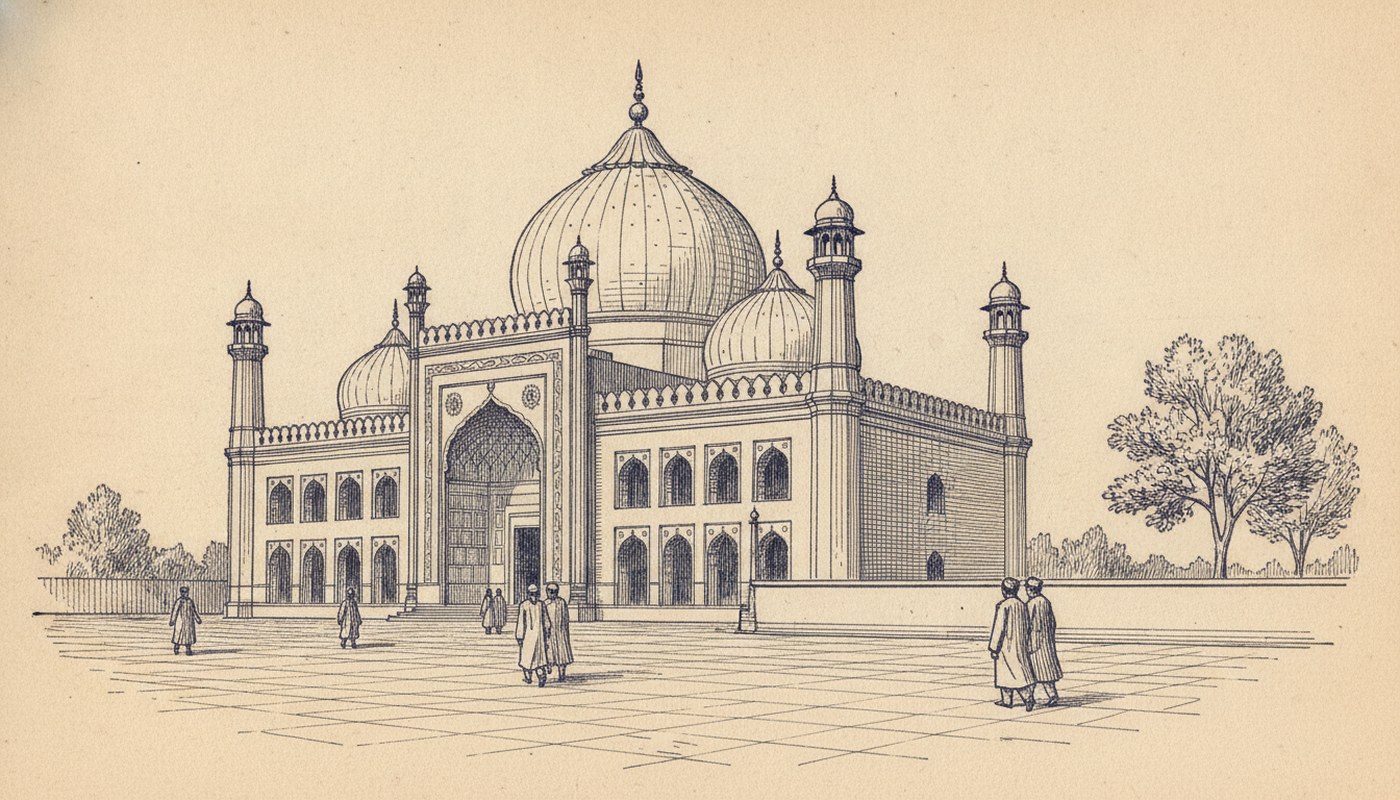
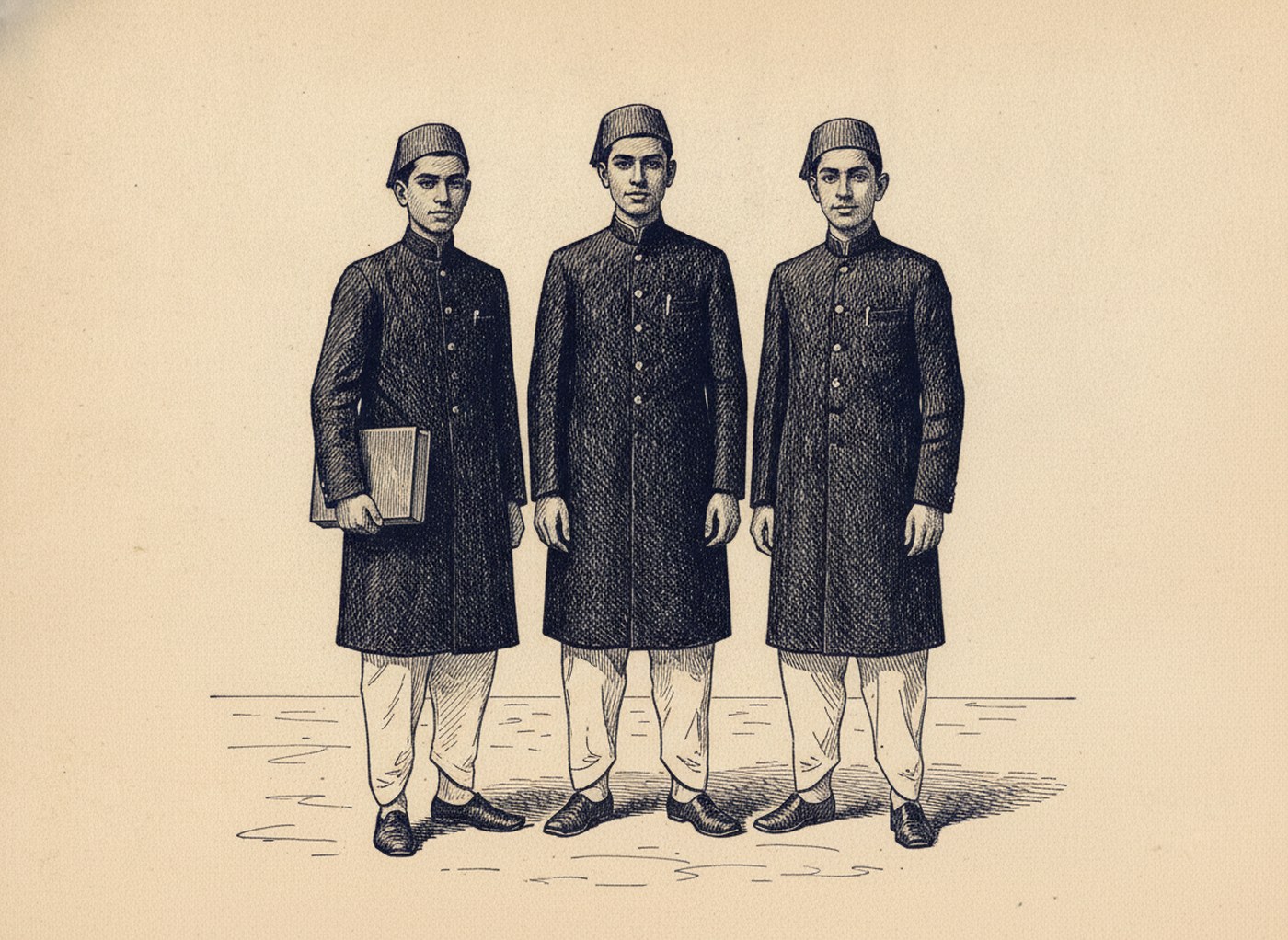
Any way the academic year passed without any difficulty and we left for our homes and never turned back, as we continued our education in our native place to start from where we had left.
Before I close this episode, I would like to give you some of the highlights of the Muslim university of Aligarh.
With the question of Muslim boys going to English schools in the last century, our religious leaders were opposed to this as they thought they would become Kafirs.
But a few diehards like Sir Syed Ahmed who was himself a very religious leader and had studied English literature to achieve distinction rose to the occasion and started a rigorous campaign for donations to build a Residential university for Muslims. It is said that he did not hesitate to go even to the prostitutes for collections. He declared that if Muslim boys do not go to English schools and colleges they would be nowhere against Hindus. Not only this he also made the British Govt. to charge Muslim students half fees in all schools and college of India as they were backward in education. The Muslim University was open to all Muslim students in India and it produced quite a number of Scholars, Doctors, Lawyers and Politicians. After partition the university was open to all citizens. Jamia Millia also produced many scholars but was shifted to Delhi in 1930.