A word about our grand mother who as I wrote before lived for about 100 years. She was very independent and refused to live with any of her three sons except for one or two year during her last days.
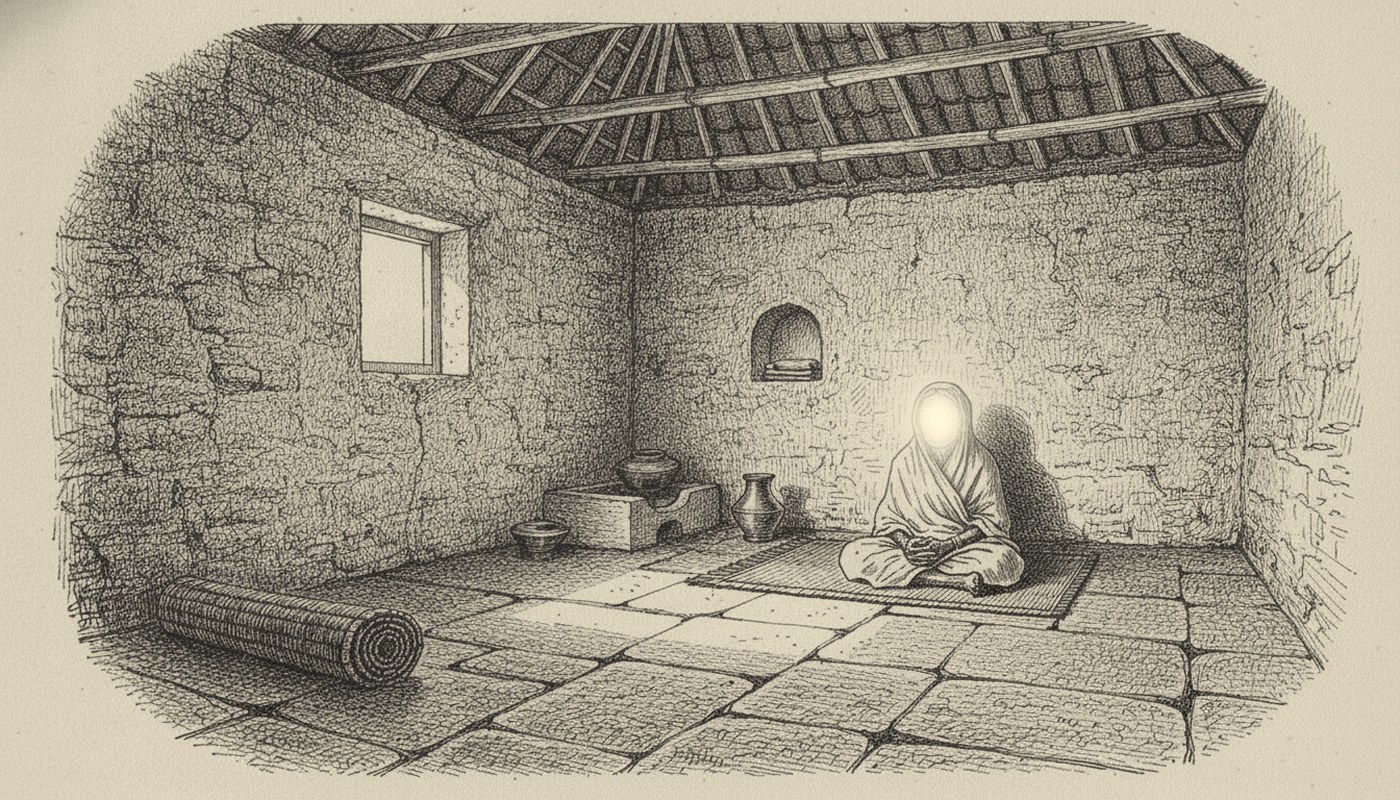
She lived in a small house consisting of one room, one kitchen and old fashion toilet. There was absolutely no furniture and the flooring was of coarse stone slabs. She slept on a mat (chatai) and cooked herself in earthen pots.
Her monthly income was Rs. 14/= (about $98 a month in today's money) contributed by her three sons. Out of this amount she used to save enough and converted her savings into a few gold coins of 10 grams each. She used to gift the coins to a bride or bridegroom of our family at the time of their marriage. The value of the gold coin was Rs. 13/= (about $90 in today's money) at that time. The corresponding value today is Rs. 3200/= (about $265 in today's money) in Pakistan and Rs. 4000/= (about $280 in today's money) in India.
Our father told us about one of the great acts of grand mother when they lived in the village (Boodgur). It appears the village and its surroundings were hit by a famine and many people were starving. Our grand parents had saved considerable grain in their house. Our grand mother took the lead and started distributing the grain to whosoever asked for it regardless of their religion or status. When our grand father cautioned her to be careful not to exhaust it. She said this "God Almighty, would take care of us and I can not see people starving to death". She also said, that "God would take care of my children for generations". How true it is that we are all happy in the sense that we never suffered for want of food.
All in all she was a dignified lady who gave us much and demanded nothing in return. Do remember her in your prayers, in fact we should remember all our fore fathers/mothers in our prayers.
In order for you to understand the economics and the value of currency of our childhood days. I am giving below a brief table.
1. Pure gold coins called Soverin could be sold or bought for Rs. 13/= each (about $90 in today's money). Net weight of one Soverin = 10 grams.
2. One Rupee (about $7 in today's money) consisted of 192 pies. One pie or at the most 3 pies would be accepted by anyone who begged. The rupee, half rupee and quarter rupee were all made of silver. Paper currency was rare. Banks were rare and business transactions were made through Hundees. Hundi was a trustworthy firm, or a person with whom money was deposited at one end and equivalent amount collected at another end.
3. Staple food was rice and Ragi. Ragi was available @ 30 K.G. per rupee (about $7 in today's money). Rice @ 20-24 K.G's per Rupee (about $7 in today's money).
4. Meat quarter to half Rupee per K.G. (about $2 to $3.50 in today's money)
5. Milk 8-10 liters for a Rupee (about $7 in today's money).
6. A Policeman's Salary was Rs. 12 - 15 P.M. (about $85 to $105 a month in today's money)
7. Four yards of good cloth was available at Rs. One (about $7 in today's money).
8. Official rate of US $ today is Rs. 26.50 and almost 30 unofficially.